
OEM & ODM Guide: How to Develop Your Exclusive Brand by Partnering with a Wrap Film Factory
Blog post description.
11/15/20252 min read
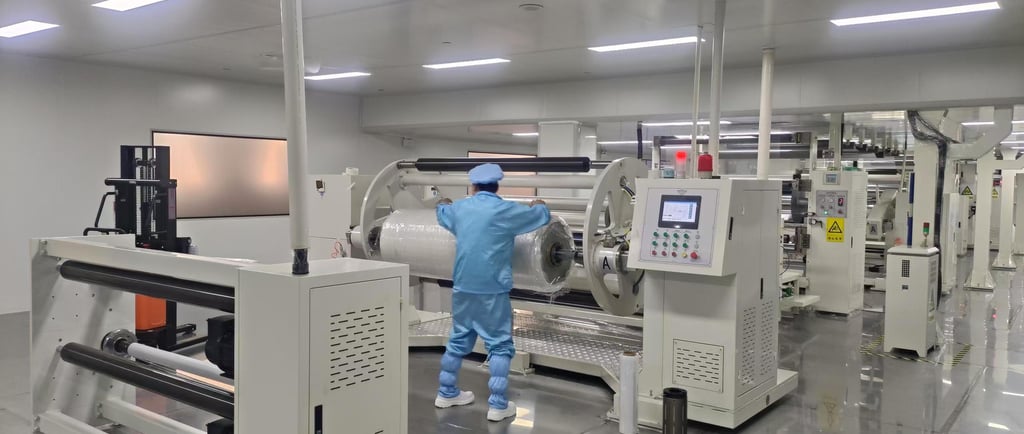
In today's homogenized wrap film market, developing a private-label brand is key for B2B wholesalers to break through. This article details how to use OEM/ODM cooperation with a factory to create a competitive exclusive brand, transforming from a distributor to a brand owner.
Introduction:
As your wholesale business reaches a certain scale, have you ever felt constrained by the pricing policies of brand owners? Do you wish to build an insurmountable barrier in the competition? The answer is: building your exclusive brand. For B2B wholesalers, partnering with a capable wrap film factory for OEM or ODM cooperation is the shortcut to achieving this goal.
Part 1: OEM vs. ODM: Concepts and Your Choice
OEM: Commonly known as "Original Equipment Manufacturing." You provide the complete product design, specifications, and technical parameters, and the factory strictly produces according to your requirements. This suits wholesalers who already have a clear brand plan and product concept.
ODM: Commonly known as "Original Design Manufacturing." The factory uses its strong R&D capabilities and existing product solutions to perform customized development for you. You can choose to adjust colors, materials, surface textures, etc., or even build your product line based on the factory's mature platforms. This is more suitable for new brands, significantly reducing development risks and costs.
Your Choice: If you are trying this for the first time, ODM is a more efficient and economical choice. You can leverage the factory's expertise to quickly launch competitive products.
Part 2: The Four-Step Cooperation Process
Requirement Communication & Intent Confirmation: Define your market positioning, target audience, budget, and desired product effects (e.g., color, texture, performance). Conduct initial discussions with the factory's sales or ODM department.
Design Finalization & Sampling Confirmation: In ODM mode, the factory will provide existing product solutions for your selection or modification. Once the direction is confirmed, the factory will produce samples for your testing and approval.
Contract Signing & Production Launch: After sample confirmation, both parties sign a contract specifying key terms like product specifications, price, Minimum Order Quantity, delivery time, payment terms, and intellectual property ownership. Subsequently, the factory arranges mass production.
Quality Inspection & Delivery: During production and before shipment, a reliable factory conducts strict quality inspections to ensure products meet standards. Upon completion, logistics are arranged for delivery to your designated warehouse.
Part 3: Key Negotiation and Cooperation Points
Minimum Order Quantity: This is the core threshold for OEM/ODM cooperation. Communicate your capabilities and expectations frankly with the factory to secure a reasonable starting MOQ.
Intellectual Property Protection: The contract must clearly state that the product designs, formulations, and colors developed for your brand are owned by you to avoid future disputes.
Quality Control System: When selecting a factory, be sure to inspect its QC processes. A responsible factory will be happy to show you its testing equipment and standards.
Market Support: An excellent partner not only manufactures products but also provides market training, marketing materials (e.g., product promo images, installation tutorial videos), and even joint marketing promotions to help your brand grow from scratch.
The transition from wholesaler to brand owner is a magnificent upgrade. By deeply partnering with a wrap film factory possessing strong ODM capabilities, you not only gain exclusive products and higher profit margins but also build a protective moat for your own business. Start evaluating factories with robust R&D and ODM services now, and take the first step in building your brand.